
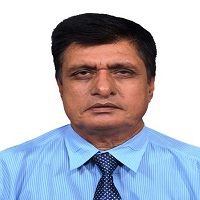
Santosh Kumar Mishra
Retired from Population Education Resource Centre, Department of Life Long Learning and Extension, S
Abstract Title: Innovations in Waste-to-Energy Technologies: Insights from Germany
Biography: Dr. Santosh Kumar Mishra (He/His) is Independent Researcher (Scholar): retired from Population Education Resource Centre, Department of Lifelong Learning & Extension, S.N.D.T. Women's University, Mumbai, India. He acquired Ph. D., and has authored 6 booklets, 4 books, 31 book chapters, 109 journal articles, 2 monographs, 7 research studies, & 119 papers for national & international conferences. He has been awarded with Certificate of Excellence in Reviewing in 2017, 2018, 2021, 2022, & 2024. He was Judge for IHA’s 20th Annual Virtual Health Literacy Awards, including Edson Awards for 2025 & 2026 seasons.
Research Interest: Waste-to-Energy (WtE) technology (which envisages transforming non-recyclable refuse into electricity, heat, or fuel) is vital for reducing greenhouse gas (GHG) emissions. Many countries, in all regions of the globe, are making efforts for excellence in WtE technology. Germany has also undertaken innovative initiatives in WtE sector. Objective of this research is to present discussion on innovations in WtE technologies in Germany. Secondary data (largely ‘qualitative’ in nature) have been used, and method of analysis is ‘descriptive’. Analysis of data indicates that nearly 150 thermal (industrial) units process millions of tons of residual waste annually, generating heat and electricity that are required for domestic and industrial consumption in Germany. For instance, the Energy from Waste Group has been planning, constructing and operating waste recycling and disposal plants since over 30 years, thereby setting standards across the European Union (EU) region. It is pertinent to note that Germany leads in WtE capacity. The country processes over 30 million tons of waste annually, and generates more than 14.5 million megawatt-hours of electricity. Importantly, Germany’s WtE industry is primarily driven by robust governmental policies that aim to promote sustainable waste management and energy recovery, in accordance with EU Waste Framework Directive. This framework encourages converting waste into renewable energy. This research briefly concludes that WtE adoption has becomes integral to urban infrastructure planning in Germany. Financial incentives for green energy producers and carbon reduction targets foster technological innovation. This policy-driven ecosystem attracts investments, strengthens infrastructure modernization, and enhances Germany’s leadership in sustainable waste utilization.